Anxiety Isn't a Character Flaw: Practical Ways to Feel More Steady (and When to Get Support)
Anxiety is incredibly common and not your fault. You can feel more steady with practical techniques like breathing exercises, grounding, and lifestyle tweaks. If anxiety interferes with daily life or you're using substances to cope, professional support can make a huge difference. Military families may need specialized approaches.
That racing heart before a big meeting. The constant "what if" thoughts that keep you up at night. The way your stomach drops when you think about everything on your to-do list.
If any of this sounds familiar, you're definitely not alone. Anxiety affects millions of people, and it's not a character flaw or a sign of weakness. It's your brain's alarm system working overtime, sometimes for good reason, sometimes not.
The good news? There are real, practical ways to feel more steady. And when those strategies aren't enough, getting professional support can be a game-changer.
What Anxiety Actually Feels Like
Anxiety shows up differently for everyone, but there are some common signs your nervous system might be running on high alert:
Physical symptoms:
Racing heart or chest tightness
Feeling jittery, restless, or "wired"
Trouble sleeping or staying asleep
Muscle tension, especially in shoulders and jaw
Digestive issues or nausea
Feeling tired but wired at the same time
Mental and emotional signs:
Constant worry or "what if" thoughts
Difficulty concentrating or making decisions
Feeling overwhelmed by everyday tasks
Irritability or feeling on edge
Avoiding situations that make you nervous
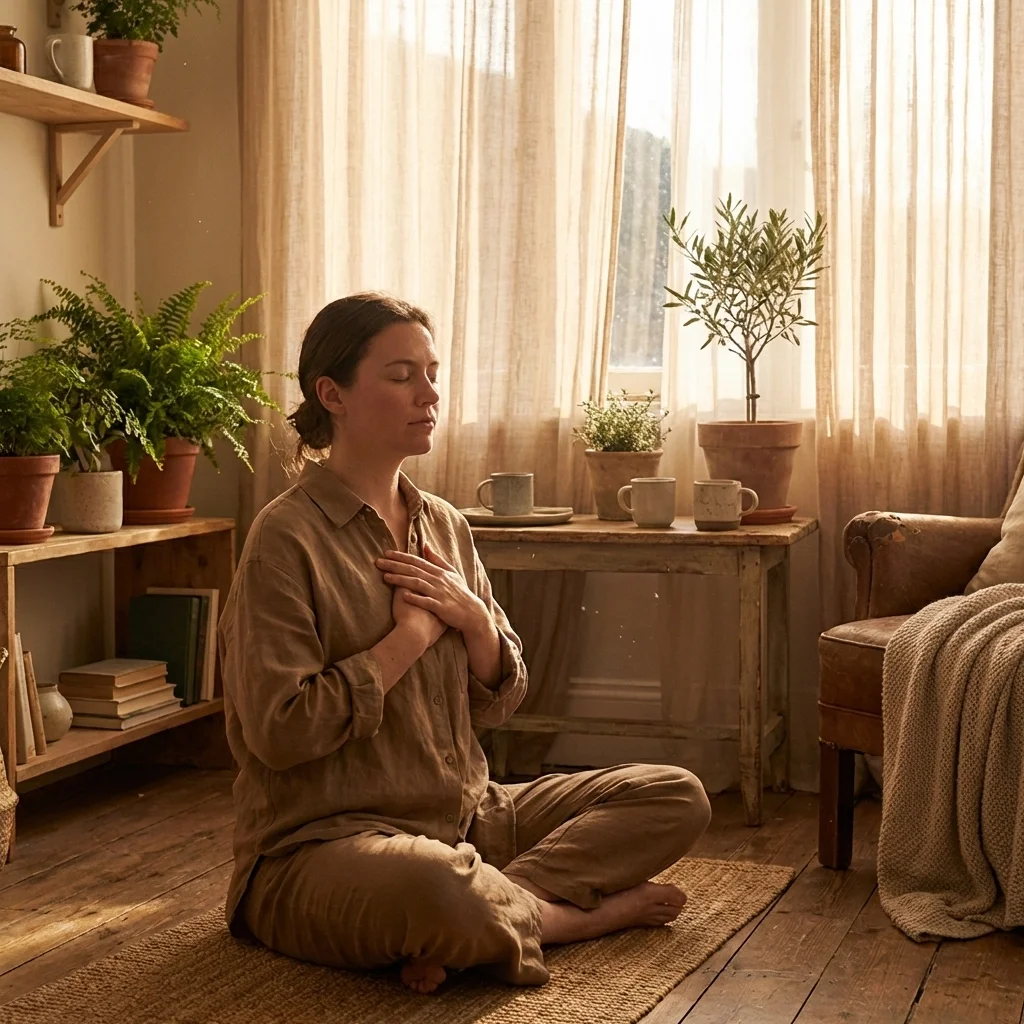
The tricky thing about anxiety is that it can convince you that every small problem is actually a huge crisis. Your brain gets stuck in "threat detection mode," even when you're objectively safe.
Practical Ways to Feel More Steady
Here's the thing, you don't have to white-knuckle your way through anxiety. There are evidence-based strategies that really work.
Start With Your Breath
When anxiety hits, your breathing often becomes shallow and fast. The simple act of slowing down your breath sends a signal to your nervous system that you're safe.
Try the 5-3-8 technique: breathe in for 5 counts, hold for 3, and exhale slowly for 8 counts. Do this at least three times, ideally throughout the day as a preventive measure.
Another option is cyclic sighing, taking a deep breath in, then a second, smaller breath on top of that, followed by a long, slow exhale. Research shows this can reduce anxiety and improve your mood.
Ground Yourself in the Present Moment
When your mind is spinning with worries, grounding techniques can anchor you back to the here and now.
The 5-4-3-2-1 technique is incredibly effective: notice 5 things you can see, 4 things you can touch, 3 things you can hear, 2 things you can smell, and 1 thing you can taste.
You can also engage your senses in other ways, light a candle, make tea, pet your dog, or run your hands under cold water. These simple actions redirect your attention away from racing thoughts.
Move Your Body
Regular movement is one of the most powerful anxiety-busters available. Even 15-30 minutes of walking, jogging, or dancing three times a week can significantly reduce anxiety levels.
Exercise releases brain chemicals like serotonin and endorphins that naturally boost your mood and relieve tension. When you're feeling anxious in the moment, even a few minutes of movement, like walking around the block or doing jumping jacks, can help ease the intensity.

Challenge Your Anxious Thoughts
Anxiety loves to tell you stories about worst-case scenarios. Learning to question these thoughts rather than accept them as facts can be incredibly freeing.
When you catch yourself spiraling, ask:
Is this thought helpful right now?
What evidence do I have that this will actually happen?
What would I tell a friend who was thinking this?
What's a more balanced way to look at this situation?
Take Care of the Basics
Sometimes the most powerful anxiety management happens through simple lifestyle adjustments:
Sleep: Aim for 7-8 hours. Poor sleep makes everything feel harder to handle.
Caffeine: Notice if coffee or energy drinks make you feel jittery. You might need to cut back.
Alcohol: While it might seem to help in the moment, alcohol can actually worsen anxiety over time.
Nutrition: Eating regularly and including vegetables, fruits, whole grains, and protein can help stabilize your mood.
Set Boundaries and Build Support
You don't have to carry everything alone. Anxiety often gets worse when we try to handle too much or please everyone.
Practice saying no to commitments that drain you. Ask for help when you need it. Spend time with people who make you feel supported and understood.
Keep a journal to identify what triggers your anxiety and what helps you feel better. Sometimes patterns become clear on paper that we miss in the moment.
When It's Time to Get Professional Support
Here's an important truth: your worries may actually get worse over time if you don't address them. Self-help strategies are incredibly valuable, but they're not always enough.
Consider reaching out to a mental health professional if:
Your anxiety persists despite trying coping strategies
Anxiety interferes with work, relationships, or daily activities
You find yourself avoiding more and more situations
You're using alcohol or drugs to manage anxiety
You're having panic attacks or physical symptoms that concern you
Getting help early makes anxiety much easier to treat. There's no shame in needing support: it's actually a sign of strength and self-awareness.

How Therapy Can Help
Professional support for anxiety often involves approaches like Cognitive Behavioral Therapy (CBT), which helps you identify and change unhelpful thought patterns and behaviors.
Acceptance and Commitment Therapy (ACT) teaches you to accept difficult feelings rather than fight them, while focusing on actions that align with your values.
For those with trauma histories, trauma-informed approaches address how past experiences might be contributing to current anxiety.
In therapy, you'll learn personalized strategies that work for your specific situation. You'll also have a safe space to explore what's really driving your anxiety and develop a sustainable plan for feeling more steady.
A Note for Military Members and Families
If you're active duty, a veteran, or part of a military family, anxiety might look a little different for you.
Hypervigilance: constantly scanning for threats: is a survival skill that serves you well in military environments. But it can be exhausting when you're trying to relax at home or adjust to civilian life.
Transitions are particularly challenging. Whether you're dealing with deployments, PCS moves, or transitioning out of service, anxiety often spikes during periods of change.
You deserve support that understands your unique experiences. Working with someone familiar with military culture can make a huge difference in your healing journey.
You Don't Have to Feel This Way Forever
Anxiety might feel overwhelming right now, but it's absolutely possible to feel more steady and in control. The strategies we've discussed aren't just temporary band-aids: they're tools that can genuinely change how you experience stress and uncertainty.
Remember, seeking help isn't giving up. It's taking charge of your mental health and choosing to invest in your wellbeing.
Ready to take the next step? We're here to support you at True North Wellness & Counseling. Our practice serves adults 18+ in Brockport, NY and offers telehealth throughout New York State.
Schedule a consultation today and let's explore how therapy can help you feel more like yourself again. You deserve support, and you don't have to navigate this alone.